
Finding Meaning in the Static
Konami’s latest Silent Hill game turns a pandemic-struck Scottish island into a study of guilt, trauma and unconfessed sin. It’s not for the squeamish.

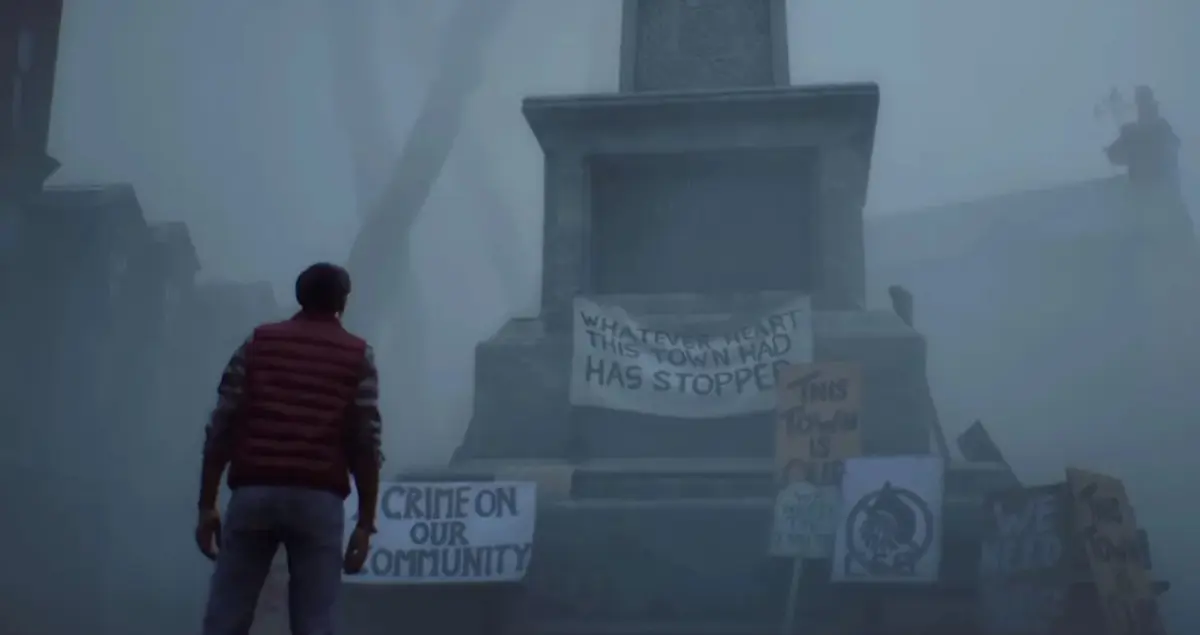
Review: Silent Hill Townfalla
In A Short Message and Silent Hill f, Konami established the idea that Silent Hill was not only a fixed place but a phenomenon or a mindset. In these games, people called into small towns where they come face to face with their own fears and guilt, turned into living, breathing horrors. The series’ latest instalment, Townfall, brings players to St Amelia a small Scottish island where protagonist Simon Ordell is forced to confront a recent tragedy. The year is 1996, and from the cannula in Ordell’s hand, it is clear he has undergone some kind of medical emergency. From here, things get weirder.
From the opening scene, it is clear St Amelia has recently been abandoned, the inhabitants having fallen victim to a mystery illness that leaves them as shambling corpses. It is clear the town has, well, fallen, as this mystery illness has stretched medical personnel to the limit and left the small, close-knit community defenseless. The comparisons to the COVID-19 pandemic become obvious from an early point, and much of the game’s scares comes through medical body horror. The monster design and some of the scenarios are among the most unsettling in the series, yet none of it ever feels cheap or unearned. From the strange, but not quite visible creature whose tendrils loom over everything to the zombie like creatures who shoot needles out of their body, the monster design is as unnerving as it is original. As usual, directly confronting enemies is a recipe for disaster, and the game encourages stealth.
In keeping with the franchise’s long-held traditions, Silent Hill: Townfall does not rely on lazy jump scares, but works to establish a creepy, unsettling atmosphere. And yet, the unfurling mystery and clever puzzles kept Insights caught in a loop between being repulsed but wanting to keep playing a little longer. The story is delivered in the usual, abstract way, and the central mystery takes a long time to become clear.
Since 2014’s beloved P.T, the Silent Hill series has experimented with first-person perspective. Here, it works well, with developers Screen Burn making the most of this to instill fear in the player. More than this, however, those who continue through the story will encounter a wider gamut of emotions. The game runs using the fifth version of the Unreal Engine and Screen Burn use it to deliver a constantly impressive world. Like all places in Silent Hill’s world building, St Amelia is transformed into a foggy, purgatory-like place that transforms over time.
Silent Hill: Townfall is not recommended for the squeamish. As a disclaimer warns before the game starts, the title explores disturbing themes and players who find the game bringing things up for them are encouraged to speak to a trusted person. But as a mature horror title, the game explores trauma in an interesting and original way. With its outlying of the protagonists’ guilt, Silent Hill does not so much as make unconfessed sin part of its subtext, as much as the text itself. While much of the series’ use of Christian symbolism is ornamental, there is still much for those who can handle its horror to sink their teeth into.
Like most Silent Hill games, Townfall has multiple endings, which the player can reach through slightly different approaches to levels. This adds a good deal of replay value and ways to dig further through the static.
Silent Hill: Townfall is now available on PlayStation 5 and Steam PC.
Comments
Moderated before publishingNo comments yet. Be the first to add to the conversation.
Leave a comment